Friday, 15 May 2009

This is Bristol

The following clips make up the documentary that me and Joe made whilst in Bristol. The idea was that we would discover Bristol through the lens of a camera and get insider tips from local people. I must warn those of a nervous constitution that Part 2 includes food preparation scenes, that vegetarians may find offensive. 

The documentary has had to be broken into 6 parts for ease of uploading. Also... It is quite long and so you can view it in sections. Apologies but YouTube has cut off the captions on the first three, so I have had to re-add them in a cheap Youtube way.

This is Bristol:
Part 1 - Clifton Suspension Bridge, Clifton Village & a local artist: 


Part 2 - Bristol by night:


Part 3 - Excursion to Cheddar Gorge & Weston-Super-Mare: 


Part 4 - Gloucester Road & Stokes Croft:


Part 5 - Brandon Hill:


Part 6 - Clifton Down & reflections on Bristol:


And for all of you hardcore fans...
Here is a lovely 1993-style rave track featuring samples from the film: http://www.mediafire.com/?4zzqhuyd4th

It was made by Tom Laws... Thanks Tom

Friday, 24 April 2009

What annoys me about the reaction to the £150k tax rate

I can't help but feel somewhat annoyed at the reaction to the budget by the press. In an otherwise rather dry non-event the biggest issue appears to have become the 50% tax on earnings for those on over £150,000 a year. 

There are three things that really anger me about the reaction of the press. Firstly, the changes don't apply until this time next year, so it's not exactly the most pressing economic issue and thus is distracting from the huge economic issues, like the the fact the UK economy will be shrinking by 3.5% this year or that 2.1 million people are now unemployed. Which are infinitely more worrying than the salaries of people who are very well paid.

Secondly, these people earn £150,000 a year. They protest about being taxed half their income, but they can only earn these hugely inflated wages because of where they work and so surely the state facilitates their wages and deserves a hefty cut. Also to think that other people (those who earning much less) should have to fit the bill at a time of economic crisis while they go on earning comparatively obscene salaries. 

Don't get me wrong, I understand the argument that entrepreneurs need an incentive, but to me that doesn't hold much weight. If these people are purely driven by the zeroes on their bank balance, then their company is unlikely to be doing a great service to society and is likely to be ripping people off and taking advantage or exploiting someone. Sure hard workers deserve to be paid more than not so hard workers and really hard workers should be paid considerably more than those who put no effort in, but a company that is purely driven by financial incentives is likely to skimp on quality if they can make larger profits and frankly if these kind of entrepreneurs will leave the country or not do it any more then surely that is a good thing. Real entrepreneurs who create business opportunities that are needed or useful to society are likely to be driven by a desire to be useful and help society alongside the quality of life that earning say £100,000 can give you. So the argument that it will hurt us all is contrived at best. If there is a finite amount of money, high wages for one person means someone else is on a lesser salary. Also lots of people work hard. I have worked very hard all this last week doing research, a bit of writing and sorting the post at a tabloid newspaper, I haven't been paid a cent and had to outlay about £90 for the pleasure. There are many people in much harder financial situations, who work much harder than me or law partners or big money auditors and struggle to put food on the table. The superwealthy don't realise how good they have it. The saddest element of all this is that much of the money will be used to soak up the debts accrued for solving this financial crisis, rather than redistributing it as public money or relief to poorer people.

Finally, the most frustrating element of the whole thing is the allegation, especially prevalent in today's right-wing press, that Labour have gone back to their socialist roots. Come off it!!! The last time Labour were socialist was in the late 1980s. The whole party is full of career politicians with no sense of right or wrong and conservatives thinly veiling themselves in Labour's torn and worn clothing. Government Ministers are manipulated by their unaccountable and highly paid consultants and media advisors (see In The Loop). They are not going left, they are trying to desperately trick the conservatives into opposing the budget and look like they are blocking a resolution to the economic crisis, to try and attempt to score a cheap political victory in their slow and dreadful decline ahead of their upcoming election defeat. It really depresses me if this is the compassionate socialist party in our country. We need another choice for our politics. Usually this would be the point to make a hopeful remark like "bring on the revolution" but I personally can't see that happening at all.

How depressing...

Wednesday, 1 April 2009

Slow Progress

Apologies for the slow progress of my blog, I have been very busy/lazy of late. 
I have just been awarded a place at City University on their Newspaper Journalism Masters after interviews, applications, work experience etc and haven't got round to doing the old blog thing.

I intend to get it going properly over the next few weeks... stay tuned there are exciting developments on the way, I promise.


Thursday, 19 February 2009

Comment: One positive, one negative

Today there have been two major developments in the Middle East conflict, one positive, one negative.

The good news is that there is an ever so slight chance that Hamas and the US government may soon talk to each other. Hopes of a dialogue were raised after Senator John Kerry, chairman of the US senate's Foreign Relations Committee was reported, by the BBC, to have been given a letter by Hamas officials.


If Hamas was able to get access to Kerry on his visit to Gaza, one might suspect that covert talks are already in place. The story seems credible as it originates from Karen Abu Zayd, the UNWRA commissioner-general.

While this potential olive branch for peace was being outstretched in Gaza, a damaging development was occurring in Tel Aviv. The Guardian believes Binyamin Netanyahu is to become the next Prime Minister of Israel. He seems to have been able to create a large enough majority to govern and opponent Tzipi Livni, who's Kadima Party recently won the election against Netanyahu's Likud by one seat, accepted that her party will form the opposition.


Netanyahu has been PM before, when the peace process had reached its most positive stage. The Oslo Accords had been signed. Netanyahu rolled back the agreements and let the peace process stall. He now opposes negotiations with the Palestinians and his government is likely to be heavily dependent on the nationalist and extreme right Yisrael Beiteinu party of Avigdor Lieberman.

The positive development of this is that this government is unlikely to last long. They look as though they will have a slim majority of 5 and they will come under considerable pressure from the increasingly leftist US administration and the relatively liberal regimes in Europe.

One positive thing happens, one negative thing happens.

Monday, 26 January 2009

Comment: Zimbabwe situation - In need of attention

While Zimbabwe’s political crisis filled the headlines last year, the most recent twists in the ongoing power struggle have barely registered in the mainstream media. Daily updates of President Obama’s first days in office, the delicate peace settlement in Gaza and the constant stream of job losses have pushed the Zimbabwean situation down the news agenda, just as the crisis reaches a pivotal moment.

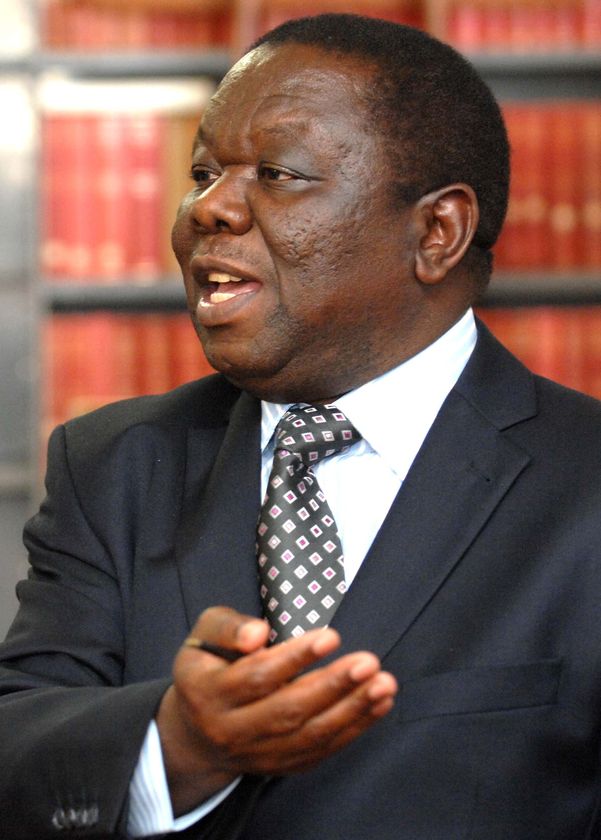
Contrary to the power-sharing agreement he made with opposition Movement for Democratic Change (MDC) leader Morgan Tsvangirai last September, President Robert Mugabe refuses to concede the ministries with which his government has oppressed and coerced the Zimbabwean people, like the Home Affairs and Information ministries. Mugabe has also been reluctant to hand over the Finance ministry, currently overseeing the country’s dire financial crisis.

As we in the UK worry about the value of the pound against the Euro, the Zimbabwean dollar’s inflation continues to spin out of control. This month saw the introduction of the Z$ Trillion note, worth around £20, which would have bought Z$ 100,000 six months ago. The currency is now so unstable that US dollars and South African rand have become legal tender.


The day before Obama was sworn in, Tsvangirai and Mugabe held an inconclusive crisis meeting which ended no closer to an agreement on who should hold which portfolios.


While the political chess game continues, people suffer. The recent Cholera outbreak has now killed over 2,000 and infected over 39,000 according to Human Rights Watch estimates made two weeks ago.

The political process now moves onto a specially convened SADC (Southern African Development Community) summit this week. However, early indications aren’t promising. After Monday’s meeting, one MDC official told Reuters, "We are worlds apart. If we were (inches) apart, we are now miles apart".

South Africa could be a key actor as SADC’s largest member, but it currently faces a complex transition in leadership with presidents past, present and future all exerting influence. Thabo Mbeki who was ousted as President last September has been a key figure in the negotiations so far and continues to act as mediator. Kgalema Motlanthe, the country’s acting President is hosting the current summit, yet his influence is undermined by the fact he will soon, in all likelihood, be replaced by ANC leader Jacob Zuma.


Despite the governments of Zambia and Botswana taking a strong line against Mugabe, it seems unlikely that SADC as a whole will pressure Mugabe into conceding the key ministries to the MDC. Perversely, this SADC conference may be the last chance the MDC has to be included in the cabinet, with Zimbabwean Deputy Information Minister Bright Matonga telling South African public broadcaster SAfm, "whether there is an agreement or there is no agreement, President Mugabe is going to form a Cabinet". If no agreement is made, it looks as though Mugabe will ignore international pressure and struggle on as President, without the MDC, as he has done for the last 21 years. At this crucial point, more than ever, Zimbabwe needs the world’s attention.


Thursday, 8 January 2009

Update: January 2009

It turns out I was extremely optimistic in my previous post, prior to Christmas. Events now seem to have made peace in Palestine/Israel a distant dream. I have also been highly disappointed by Obama's silence on this issue. Ok, he is not yet President, but Israel seems to have timed this attack to take advantage of the power vacuum in Washington. As ever the calls, especially from the US administration, for a ceasefire require more responsibility for the Palestinians than the Israeli's despite the Israelis having killed 688 Palestinians compared to the 10 Israeli's killed by the Palestinians.

I just hope the international community would start pressurising Israel into stopping this attack as soon as possible, rather than having loose rhetoric. Condemning Israel doesn't mean you are approving militants related to Hamas, the rest of the international community needs to understand that.

Sunday, 14 December 2008

Comment: Last Chance for a two-state solution?

In my internet surfings, I found this rather interesting post by Bernd Debusmann. Debusmann suggests that the Obama Administration is the last opportunity for a two-state solution to the Israel-Palestine conflict. I think he has a good point. As the Palestinian situation gets more and more desperate, the idea of a united Palestinian state becomes less and less likely. We already have effectively two Palestines, with Fatah and Hamas governing the West Bank and Gaza respectively.

More and more people are suggesting a one-state solution which sounds like the most positive solution to the conflict. See: (Haaretz: 'Is the two-state solution in danger?' and 'Which kind of bi-national state?', Alternative Palestinian Agenda: Peace Initiative).

While the idea of a federalised but equal state is appealing, it is also unimaginable. Israel is a unique country in that its sole reason for existence is the because of its religious separateness from other countries. If an agreement was made which included a considerable population of Muslims or Christians having political and social parity with the Jews in Israel, this would contradict the purpose of the Israeli state and render the Jewish state pointless. Why have a Jewish homeland if it is not exclusively Jewish? Israel's original purpose was to protect Jews and give them a homeland where they would be safe from the persecution they recieved in Europe. While I don't agree with the idea of an exclusive state for one religion, many in Israel do and the Israeli political lobby as well as the majority of the population would never accept Israel becoming a religiously plural society, where being Jewish wasn't a key element of National identity.

If the Israeli state is unable to give up some of its war-acquired land for the foundation of a Palestinian state, it is certainly not going to give up the whole of its country to what would quickly become a majority Arab population. In any one-state solution, Jews would become a minority group and it would become totally unjustifiable for them to rule over an Arab minority, as the white population did over the black population in South Africa. The one-state solution was needed in 1947, before Israel became an exclusively Jewish land and when a multi-ethnic Palestine was still possible.
Over 60 years of violence and bloodshed make it impossible for a just and fair society to be built as if nothing ever happened in 2009. The current Israeli regime and political establishment would also attempt to co-opt the moderate Palestinians, while most Palestinians would expect a lot from their new state. This is likely to accentuate divisions between the Palestinian elite and the Palestinian people which Israel has already caused. Such a scenario could be far more dangerous than it is now for Jewish and Arab citizens in this new country.

A two-state solution is the only viable solution to the current situation and this can only be achieved with the political support of a US Administration. The Obama presidency is certainly going to take a more balanced view of the conflict than the Bush administration did.

Obama obviously cannot ignore the US Jewish lobby and the rhetoric of democratic Israelis against 'terrorist' Palestinians that has been allowed to pervade the Western media. While this is an extremely crude and untrue representation of the situation, it has become the accepted belief of many. However, Obama has at least as much political capital in this situation as Bill Clinton did, and Clinton got the two parties talking and even got them signing agreements in Washington. I also believe that if Israeli Prime Minister Yitzhak Rabin had not been assasinated at the rally for peace and Netanyahu and Sharon come in and rolled back the peace process by years, we might today have a Palestinian state.

According to wikipedia, Obama is just as reliant on Jewish voters as Clinton was (both gained around 80% of the Jewish vote in the Presidential elections. (For more details go to http://en.wikipedia.org/wiki/United_States_presidential_election,_2008 & http://en.wikipedia.org/wiki/United_States_presidential_election,_1992)), and his rhetoric does not necessarily suggest he will tackle the solution head on, at least not immediately. He does have the financial crisis, Iraq, Afghanistan, Global Warming, Iran, India-Pakistan and all the other smaller issues to deal with as well.

I hope that he can get round to it soon though, as time and hope is running out for this generation of Palestinians and the US's leverage in world politics decreases every year.